Your dog seems fine. He’s eating well, running around the house, wagging his tail every time you walk in. Your cat is grooming herself, sleeping in her favourite spot, doing all the cat things. Everything looks normal.
So why would you take a healthy pet to the vet?
This is one of the most common questions Pakistani pet owners ask – and it is exactly the right question to ask. The honest answer might surprise you: the pets most in need of a vet visit are often the ones who appear perfectly healthy.
Disease does not always announce itself. Kidney disease, dental infections, early-stage tumours, parasitic infestations, and hormonal disorders can silently progress for months – sometimes years – before a pet shows any visible sign of illness. By the time symptoms appear, the condition is often advanced and far more expensive, painful, and difficult to treat.
That is the entire point of a pet wellness exam. It is not a visit because something is wrong. It is a visit to make sure nothing is going wrong beneath the surface – and to catch it early if it is.
This guide covers everything you need to know: what a wellness exam actually includes, how often your dog or cat needs one, what to expect by age and life stage, how to prepare, and why preventive care matters even more in Pakistan’s unique climate and disease environment.
What Is a Pet Wellness Exam?
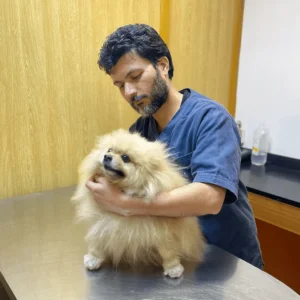
A pet wellness exam – also called an annual checkup, routine physical, or preventive health visit – is a comprehensive, nose-to-tail health assessment performed by a licensed veterinarian on a pet that appears clinically healthy.
It is not the same as a sick visit. When you bring your pet to the vet because they are limping, vomiting, or refusing food, that is a diagnostic visit – the vet is chasing a specific problem. A wellness exam works completely differently. It is structured, systematic, and proactive. The vet isn’t looking for one thing; they are looking at everything, creating a health baseline, comparing it to previous visits, and catching small deviations that signal a larger problem beginning to develop.
Think of it this way. Your doctor doesn’t wait for you to collapse before scheduling your annual blood work. The same logic applies – and in some ways, it matters even more – for your pet. Animals are wired by instinct to hide signs of weakness. Dogs and cats evolved to mask pain and illness because showing vulnerability in the wild is dangerous. By the time your pet shows you something is wrong, their body has often been compensating for quite a while.
A regular wellness exam removes that mask. It gives your vet the information they need when your pet is well, so any future deviation is immediately meaningful.
What Does a Pet Wellness Exam Include? A Step-by-Step Walkthrough
Every veterinary clinic runs its exam slightly differently, but a comprehensive wellness exam covers all of the following:
1. Health History & Lifestyle Review
The exam always starts with conversation. Your vet – or a vet technician – will ask about your pet’s diet, water intake, exercise routine, any changes in behaviour, bowel movements, and whether your pet has had any exposure to other animals. If you notice anything at home that seems different from usual – even something vague, like your dog seems slightly less energetic lately – this is the time to mention it.
At Zia Vet Clinic, our vets pay close attention to lifestyle factors because Pakistan’s environment introduces specific risks. Summer heat, open garbage exposure, tick-infested green areas, and multi-pet households all affect what preventive recommendations your pet needs.
2. Weight & Body Condition Score
Your pet is weighed at every visit. This single data point is more valuable than it looks. Unexplained weight loss or gain – even a few hundred grams – can be the first visible sign of thyroid disease, diabetes, kidney dysfunction, parasites, or cancer. A body condition score (BCS) is also assessed, rating your pet’s body fat and muscle mass on a standard scale. Obesity is one of the most overlooked health issues in Pakistani pets, particularly in apartment-kept dogs who get limited exercise.
3. Vital Signs
The vet checks your pet’s:
- Temperature – fever is a key indicator of infection or inflammation
- Heart rate – an irregular rate or rhythm suggests cardiac issues
- Respiratory rate – abnormal breathing patterns can signal lung or airway disease
- Pulse quality – weak or bounding pulses have different clinical meanings
4. Head-to-Tail Physical Examination
This is the core of the visit. A systematic physical examination covers:
Eyes – checked for discharge, cloudiness, redness, signs of glaucoma, cataracts, or retinal changes
Ears – examined for wax build-up, infection (very common in Pakistani dogs, especially during monsoon season), ear mites, and polyps. Ear infections are one of the top reasons dogs visit the vet in Pakistan, and catching one early prevents it from going deep into the ear canal where it becomes far more serious.
Nose & Mouth – the vet checks for nasal discharge, dental tartar, plaque, inflamed gums, loose teeth, and oral masses. Dental disease affects over 80% of dogs and 70% of cats over three years of age – most owners do not know their pet has a painful tooth infection because the animal simply stops showing it. Our veterinary dentistry service addresses exactly these issues before they progress.
Skin & Coat – the skin is examined for parasites (ticks, fleas, mange mites), hot spots, fungal infections, lumps, bumps, and coat quality. In Pakistan’s humid summers, skin conditions escalate quickly. Ticks are particularly prevalent in Lahore and Karachi’s green belt areas and can transmit tick fever, a life-threatening condition.
Lymph Nodes – gently palpated in the neck, armpits, groin, and behind the knees. Enlarged lymph nodes can be an early sign of infection or lymphoma.
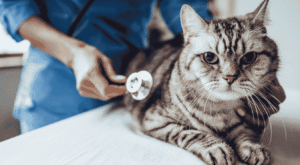
Heart & Lungs – the vet listens carefully with a stethoscope. Murmurs, abnormal sounds, fluid accumulation in the lungs, and irregular rhythms are all detectable this way. Our clinic offers ECG and Echocardiography for pets where a cardiac issue is suspected.
Abdomen – palpated (felt by hand) for organ size, masses, pain response, and any unusual findings in the stomach, intestines, liver, spleen, kidneys, and bladder.
Musculoskeletal System – joints, muscles, and limbs are assessed for stiffness, swelling, or pain. Arthritis is common in senior dogs and often goes undetected because dogs compensate by moving differently rather than crying out.
Genitals & Reproductive Organs – checked for abnormalities, especially important for pets that have not been neutered or spayed, as reproductive organ cancers are common in unaltered animals.
5. Vaccination Review & Updates
Your vet will review your pet’s vaccination history and recommend any overdue boosters. Core vaccines for dogs include distemper, parvovirus, hepatitis, and rabies. For cats, panleukopenia (cat parvo), herpesvirus, and calicivirus are the core vaccines. The specific schedule depends on your pet’s age, lifestyle, and risk factors.
Parvovirus is a genuine concern in Pakistan – we have published a detailed guide on canine parvovirus and feline panleukopenia that every Pakistani pet owner should read. You can book your pet’s vaccination at the same appointment as the wellness exam.
6. Parasite Screening & Deworming Assessment
Your vet will check for internal and external parasites. This may include a stool sample examination for intestinal worms and protozoa. Regular deworming is essential in Pakistan, where environmental parasite load is high – especially for pets that go outdoors or are in contact with stray animals. If you want to understand why this matters, read our in-depth article on deworming for dogs and cats.
7. Lab Work & Diagnostic Screening (When Recommended)
Depending on your pet’s age, breed, and health history, your vet may recommend additional diagnostic tests:
- Complete Blood Count (CBC) – assesses red and white blood cell counts, detects anaemia, infection, and inflammation
- Biochemistry Panel – evaluates liver, kidney, pancreas, and blood sugar function
- Urinalysis – checks for urinary tract infections, kidney disease, and diabetes
- Faecal exam – screens for intestinal parasites
- Thyroid testing – recommended for cats over 7 years
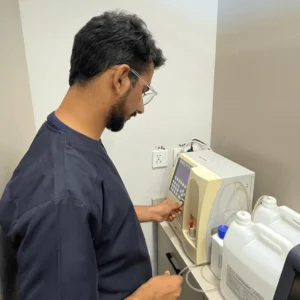
These tests are performed in-house at our veterinary laboratory. Results are usually available within the same visit or within 24 hours.
8. Nutritional & Lifestyle Counselling
The vet will discuss your pet’s current diet and make recommendations based on their weight, age, and health findings. This includes guidance on whether your current food is meeting your pet’s needs – something we explore in detail in our blog on homegrown vs. pre-made pet food. We also offer a dedicated diet management service for pets with weight issues, food sensitivities, or breed-specific nutritional needs.
How Often Should I Take My Pet to the Vet?
This is the question most pet owners in Pakistan get wrong – not because they are careless, but because no one has clearly told them the answer. The correct frequency depends entirely on your pet’s age and health status.
Puppies & Kittens (Under 1 Year)
The first year of life is the most vet-intensive. Young animals have developing immune systems, require a series of vaccinations spaced several weeks apart, and need monitoring for growth, nutrition, parasites, and developmental issues.
Recommended schedule:
- Every 3-4 weeks from 6-8 weeks of age until 16 weeks (for the primary vaccination series)
- One visit around 5-6 months for spay/neuter consultation
- One visit at 12 months to transition to the adult care schedule
This is also when your vet will discuss microchipping, which we strongly recommend – especially in urban Pakistan where pets can easily get lost in busy streets.
Adult Dogs & Cats (1-7 Years)
Once your pet reaches adulthood and has completed their vaccination series, the general rule is once a year, at minimum. This single annual visit covers the full physical exam, booster vaccines, parasite screening, and a health update.
Do not skip this visit just because your pet seems healthy. As mentioned earlier, many conditions are entirely asymptomatic at this stage – they are only detectable through examination and lab work.
Senior Pets (7+ Years)
Senior pets age faster than we perceive. A 7-year-old dog is roughly equivalent to a 50-year-old human in biological terms. Their bodies are changing faster, their organ function needs closer monitoring, and conditions like kidney disease, liver dysfunction, arthritis, dental disease, diabetes, and cancer become significantly more common.
Senior pets should visit the vet every 6 months.
Twice-yearly checkups for senior animals are not excessive – they are the standard of care recommended by organisations like the American Animal Hospital Association (AAHA). At Zia Vet Clinic, we offer comprehensive senior health panels that include bloodwork, urinalysis, and imaging where needed.
| Life Stage | Age | Recommended Frequency |
|---|---|---|
| Puppy / Kitten | Under 1 year | Every 3–4 weeks (vaccination series), then annually |
| Adult Dog / Cat | 1–7 years | Once per year |
| Senior Dog / Cat | 7+ years | Every 6 months |
| Pets with chronic illness | Any age | As directed by vet (often every 3–6 months) |
Is the Wellness Exam Different for Dogs and Cats?
The structure of a wellness exam is similar for both species, but there are meaningful differences in what vets look for.
Dogs are at higher risk for tick-borne diseases, ear infections, dental tartar, and joint issues – all of which are assessed specifically. Large breed dogs also need hip and joint evaluation from an early age, as breed-specific conditions like hip dysplasia are common.
Cats are remarkably good at hiding illness. Their exams place extra emphasis on kidney function (chronic kidney disease is the leading cause of death in older cats), thyroid health (hyperthyroidism is very common in cats over 10), and dental disease. Cats also need urinalysis more routinely than dogs because urinary tract problems are frequent.
Indoor cats are often skipped for vet visits because owners assume they are not exposed to risks. This is a mistake. Indoor cats still develop dental disease, obesity, kidney issues, hyperthyroidism, and stress-related conditions. They still need annual exams.
Why Pakistan’s Climate Makes Wellness Exams Even More Critical
Pakistani pet owners face environmental challenges that many international vet guides do not account for.
Summer heat (May-August) pushes internal body temperatures in pets, stresses kidneys and hearts, and creates ideal conditions for bacterial skin infections and ear infections. Our summer pet care guide covers warning signs to watch for between checkups.
Monsoon season increases humidity, fungal skin infections, and waterborne parasites dramatically. Pets that walk in garden areas or parks during and after the rains are at elevated exposure risk.
Year-round tick exposure in most Pakistani cities – particularly in areas with trees, grass, and stray animal populations – means tick-borne illness (tick fever/ehrlichiosis) is a real and recurring risk. This is screened during a wellness exam.
Stray animal contact introduces rabies risk, parvovirus, leptospirosis, and intestinal parasites – all of which are addressed through the vaccination and parasite components of the wellness exam.
These are not theoretical risks. They are the conditions our vets at Zia Vet Clinic see regularly across our Lahore and Karachi branches.

How to Prepare for Your Pet’s Wellness Exam
Getting a few things in order before you arrive makes the visit smoother and more productive.
Bring with you:
- Your pet’s previous vaccination records (if this is a first visit to a new clinic)
- A list of any medications or supplements your pet currently takes
- A fresh stool sample (if your vet has asked for parasite screening) – collected that morning and brought in a clean, sealed container
- A written list of any concerns, changes, or questions you have about your pet’s health
Observe before you go:
- Has your pet’s appetite, water intake, or energy level changed recently?
- Any changes in urination, defecation, or litter box behaviour?
- Have you noticed any lumps, limping, scratching, or change in coat quality?
- Any sneezing, coughing, or eye/ear discharge?
For anxious pets:
Some pets are naturally stressed by vet visits. If your pet gets extremely anxious, let the clinic know when you book so they can suggest arrival times that are quieter. Bringing a familiar blanket or toy can help. Do not withhold food unless your vet has specifically asked for a fasted sample.
You can book your appointment at Zia Vet Clinic online – available for our DHA Lahore, Johar Town Lahore, and DHA Karachi branches.
What to Expect at Zia Vet Clinic’s Wellness Exam
At Zia Vet Clinic, a wellness exam is not a rushed five-minute appointment. Our vets take the time to go through a thorough physical assessment, review your pet’s full history, answer your questions, and give you a clear picture of what is happening with your pet’s health.
Our team of vets includes veterinary surgeons and physicians trained to international standards – our lead surgeon holds Royal Veterinary College (UK) and European Board credentials. If a wellness exam reveals anything that needs further investigation, we have everything we need in-house: a laboratory, digital X-rays, ultrasound, ECG/Echo, and MRI/CT scanning – all available at our branches without requiring a referral elsewhere.
That means if your pet’s exam flags something, we can investigate it the same day. That matters.
We also follow a veterinary philosophy we believe in deeply – you can read more about it on our Our Philosophy page. The short version: we treat your pet the way we would want our own animals treated.
The Real Cost of Skipping a Wellness Exam
Many Pakistani pet owners delay or skip wellness exams to save money. It is completely understandable – vet visits have a cost, and if your pet looks fine, spending money on a checkup feels unnecessary.
But here is what the numbers actually look like in practice.
A routine wellness exam that catches kidney disease in its early stages can be managed with dietary changes and medication – a manageable long-term cost. The same kidney disease caught in its final stage often requires hospitalisation, intravenous fluids, and intensive care – at a cost ten to twenty times higher, with far worse outcomes.
A dental infection caught during a wellness exam is treated with a routine dental cleaning or procedure. Left undetected for another year, the same infection can spread to the jawbone or enter the bloodstream and affect the heart and kidneys – a far more complicated and expensive intervention.
The AAHA puts it simply: preventive veterinary care costs significantly less than treating advanced disease. This is not a marketing claim – it is basic veterinary economics. Prevention is not a luxury. It is the cheapest form of care available.
FREQUENTLY ASKED QUESTIONS
What is a pet wellness exam?
A pet wellness exam is a routine, head-to-tail health assessment performed by a veterinarian on a pet that appears healthy. It is not a sick visit – it is a preventive check designed to catch health problems before symptoms appear. The exam covers vital signs, a full physical inspection, vaccination review, parasite screening, and optional lab work based on your pet’s age and history.
What does a vet check during an annual wellness exam?
The vet checks your pet’s weight and body condition, eyes, ears, nose, mouth and teeth, skin and coat, lymph nodes, heart and lungs, abdomen, joints, and reproductive organs. Vaccinations are reviewed and updated. Depending on your pet’s age, blood work, urinalysis, and a stool sample may also be recommended.
How often should I take my dog to the vet in Pakistan?
Healthy adult dogs need at least one vet visit per year for a routine wellness exam. Puppies need visits every 3-4 weeks during the first four months for their vaccination series. Senior dogs (7 years and older) should visit every six months. Dogs with existing health conditions may need more frequent checkups as advised by their vet.
How often should I take my cat to the vet?
Adult cats need one annual wellness exam. Kittens need more frequent visits in their first year for vaccines, deworming, and developmental monitoring. Cats over 10 years old should visit every 6 months, as conditions like kidney disease and hyperthyroidism are common in older cats and progress quickly when undetected.
What is the difference between a wellness exam and a sick visit?
A wellness exam is scheduled when your pet appears healthy – its purpose is prevention and early detection. A sick visit happens when your pet shows signs of illness or injury, and the vet focuses on diagnosing and treating the specific problem. These are separate appointment types and cannot typically be combined into one visit.
Does my indoor cat really need a wellness exam?
Yes. Indoor cats are still at risk for dental disease, obesity, chronic kidney disease, hyperthyroidism, and stress-related conditions – none of which require outdoor exposure. Many cat owners are surprised to discover their indoor cat has advanced dental disease or early kidney changes at their first wellness exam in years. Annual exams are essential regardless of lifestyle.
What should I bring to my pet’s vet checkup?
Bring your pet’s vaccination records, a list of any medications or supplements, and a written list of any concerns or changes you have noticed at home. If your vet requested a stool sample for parasite testing, bring a fresh one collected that morning. For a first visit to a new clinic, bring any previous medical records if available.
How much does a pet wellness exam cost in Pakistan?
The cost varies by clinic, location, and what is included. At Zia Vet Clinic, our wellness exam covers a thorough physical assessment, vaccination review, and parasite screening. Additional lab work is priced separately depending on what is recommended. Contact us directly at our booking page for current pricing at your nearest branch.
Can a vet detect cancer during a routine wellness exam?
A wellness exam is not a dedicated cancer screening, but it can detect early warning signs. The vet palpates lymph nodes, examines the skin for new masses, checks organ size through abdominal palpation, and assesses weight trends. When something unusual is found, follow-up imaging – such as ultrasound or digital X-ray – can investigate further the same day at Zia Vet Clinic.
What happens at a puppy’s first vet visit?
A puppy’s first visit includes a full physical exam, weight check, and a review of the vaccination and deworming schedule. The vet will assess your puppy’s overall development, discuss nutrition, answer your questions about behaviour and training, and set up the schedule for subsequent visits. It is also a good time to ask about microchipping and future neutering.
Conclusion: Do Not Wait for Something to Go Wrong
The hardest part of responsible pet ownership in Pakistan is not the feeding, the grooming, or the training. It is the quiet, invisible work of keeping your pet healthy when everything appears to be fine.
Your pet cannot tell you when something feels off. They will not complain until the discomfort becomes undeniable. And in many cases, by then, a manageable condition has become a serious one.
A wellness examination once a year – twice a year for senior pets – is the single most impactful thing you can do for your pet’s long-term health. It is not a luxury item on the pet care list. It is the foundation of everything else.
At Zia Vet Clinic, we have been doing this since 2014, across three branches, for thousands of pet families in Lahore and Karachi. We know Pakistani pets, Pakistani environments, and the specific health challenges your dog or cat faces here. Our vets are not here to run up a bill – they are here to make sure your pet is still with you, healthy and comfortable, for as long as possible.
If your pet has not had a checkup in the last year – or you cannot remember the last time they did – book an appointment today.
Book Your Pet’s Wellness Exam at Zia Vet Clinic
Our wellness exams are available at all three branches:
- DHA Lahore – 139-G, Commercial Area, Phase-1, DHA, Lahore | +92 321 8477847
- Johar Town Lahore – Shaukat Khanum Chowk, Opp. UCP, Johar Town | +92 321 7977737
- DHA Karachi – 61-C, Zulfiqar Commercial Avenue, Phase-VIII, DHA Karachi | +92 313 9999759
Book an Appointment Online
View All Our Services
Your pet has been there for you every single day. Make sure you are there for them.