
A parrot owner in Lahore notices their African Grey sitting lower than usual on the perch, feathers slightly puffed. They assume it had a rough night. They wait. By the time they arrive at the clinic two days later, the bird has been seriously ill for nearly 72 hours.
This scenario plays out more often than it should – not because owners don’t care, but because exotic pets are extraordinary at appearing fine when they aren’t. It’s one of the most common patterns the exotic team at Zia Vet Clinic sees across all three branches: an animal that was quietly deteriorating while its owner waited for a more obvious sign.
Birds, rabbits, reptiles, guinea pigs, and most small mammals evolved as prey species. Showing weakness in the wild means becoming a target. So they suppress visible signs of illness for as long as biologically possible. By the time you notice something is wrong – fluffed feathers, an untouched food bowl, a tortoise that can’t hold its head up – the underlying condition is often already serious.
This guide breaks down exactly what to watch for, species by species, and how to separate “keep an eye on it” from “call the clinic right now.”
Why Exotic Pets Hide Illness – and Why That’s Dangerous for Pakistan Pet Owners
The instinct to mask pain and illness is hardwired into every species in the exotic pet category. It served these animals well in the wild, where predators target the weakest individual first. In captivity, that same instinct works directly against them – and against you as an owner trying to catch illness early.
A rabbit that has been off its food for three days will still approach the front of the enclosure when you walk over. A parrot with a respiratory infection will still call out and climb its perch – until the day it simply can’t anymore. Reptiles, because of their naturally slow metabolic rate, can mask deterioration for weeks before collapsing rapidly.
The Cornell University College of Veterinary Medicine notes that because many exotic animals instinctively hide signs of illness, routine checkups are essential for early detection – and that early diagnosis dramatically improves treatment outcomes. The same logic applies at home: you need to know what subtle changes look like before they become obvious ones.
That awareness is the entire point of this guide.
Warning Signs Your Pet Bird Is Sick
Birds are the most popular exotic pet in Pakistan – African Greys, cockatiels, ring-neck parakeets, lovebirds, and budgerigars are found in homes across Lahore and Karachi. They are also among the most skilled animals at concealing deteriorating health, which makes knowing the early warning signs genuinely life-saving.
What to Watch for Every Day in Your Bird
Healthy birds are alert, vocal, and active. Any departure from your bird’s normal baseline – even a subtle one – deserves attention. Specifically:
- Fluffed or puffed feathers outside of sleep – a bird that looks “puffy” is conserving body heat, which almost always means something is wrong internally
- Sitting low on the perch or on the cage floor – healthy birds perch upright and alert; a bird on the floor is significantly unwell
- Partially closed eyes or unusual drowsiness during daylight hours
- Changes in droppings – watery droppings, greenish-black coloring, or a complete absence of droppings are all red flags
- Reduced or no vocalization in a normally vocal species
- Not eating or drinking – skipping even one meal is unusual for most parrot species
- Tail bobbing during breathing – this is a sign of labored respiration and should be treated as urgent, not monitored
- Discharge from the nostrils or eyes
The key rule with birds: by the time a clinical sign is visible to you, the bird has typically been ill for at least 24 to 48 hours. Don’t wait for improvement. Book an exotic animal consultation the same day you notice something wrong.
Egg Binding in Parrots – This Is a 48-Hour Emergency
Egg binding occurs when a female bird is unable to pass an egg from her reproductive tract. It’s more common than most owners realize, particularly in cockatiels, budgerigars, lovebirds, and smaller parakeet species – though larger parrots are also affected.
According to the MSD Veterinary Manual, egg-bound birds often present as emergencies, and the prognosis worsens significantly the longer the egg remains unresolved.
Warning signs in female birds:
- A visibly swollen abdomen or swelling around the vent
- Straining or pushing movements without result
- Sitting on the cage floor rather than the perch
- Labored breathing
- Weakness or inability to hold the perch
If you own a female parrot – at any age – and notice any of these signs, call the vet immediately. Diagnosis is confirmed through physical examination and imaging. At Zia Vet Clinic, our digital X-ray and ultrasound capabilities allow fast, species-appropriate diagnosis with minimal additional stress to your bird.
Feather Plucking in Parrots – Medical or Behavioral?
Feather plucking is one of the most frequently mismanaged problems in pet parrots in Pakistan. Many owners assume it’s purely behavioral – boredom, loneliness, or insufficient interaction. That’s sometimes true. But a significant proportion of feather-plucking cases have an underlying medical cause that goes undiagnosed and untreated for months.
Medical causes include: bacterial or fungal skin infections, external parasites, nutritional deficiencies (particularly protein, amino acids, or zinc), systemic illness, or reproductive disorders.
Behavioral causes include: chronic stress, environmental monotony, disrupted sleep schedules, excessive owner bonding, or changes in the household.
The critical point: you cannot distinguish one from the other without a veterinary examination. Attempting behavior modification on a bird with an active infection will accomplish nothing. A comprehensive wellness examination including a targeted laboratory workup is the correct first step, not a new toy or a different feeding schedule.
Warning Signs Your Rabbit or Guinea Pig Is Sick
Rabbits have become one of the most commonly owned exotic pets in urban Pakistan, particularly in Lahore and Karachi. Guinea pigs are not far behind. Both are prey species that conceal illness very effectively – and both have specific, early warning signs that owners need to recognize before the situation becomes critical.
Rabbits: Not Eating Is Never Normal
Inappetence – not eating – is the single most common reason rabbits are brought to exotic vet clinics. And it is never normal. A healthy rabbit grazes and eats throughout the day. Any meaningful reduction in food intake, or a complete stop, warrants same-day veterinary attention.
The reason this matters so urgently: rabbits have a gastrointestinal system that depends on near-constant movement. When a rabbit stops eating – for any reason – gut motility slows. What follows can be GI stasis, a condition where the digestive tract essentially stops functioning. It develops quickly and can be fatal within 24 to 48 hours if untreated.
Additional rabbit warning signs:
- No droppings, or very small, dry, or misshapen pellets
- Loud tooth grinding (different from the soft purring of a content rabbit – this is a pain response)
- Sitting hunched in a corner with a tense posture
- Wet fur around the chin or under the jaw – often caused by drooling secondary to dental pain
- Head tilt – typically indicates inner ear infection or neurological involvement
- A hard, bloated, or visibly tender abdomen
- Labored or rapid breathing in a rabbit at rest
Dental Disease in Rabbits and Guinea Pigs – Pakistan’s Most Missed Diagnosis
Dental disease is among the leading causes of chronic illness in rabbits and guinea pigs – and it is consistently caught late, because the animal compensates quietly and the signs build gradually.
Both rabbits and guinea pigs have continuously erupting teeth that grow throughout their lives. In the absence of sufficient fibrous food – particularly grass hay – the teeth don’t wear at the correct rate and begin to develop abnormal angles and sharp spurs that cut into soft tissue. In rabbits, overgrown tooth roots can even press against the tear duct, causing eye discharge with no obvious oral symptoms.
Signs of dental disease in rabbits and guinea pigs:
- Reduced food intake, or preference for soft foods over hay
- Dropping food while attempting to eat
- Gradual weight loss over several weeks
- Drooling or persistently wet chin fur
- Nasal or eye discharge in rabbits (root involvement)
- Reduced grooming
The critical issue is timing. By the time most owners notice these signs, the dental pathology is already well established. A routine wellness examination every 3 to 6 months – including an oral assessment – is the most effective way to catch this early. In more complex cases, digital X-rays or advanced imaging reveal root pathology that a visual exam alone cannot detect.
Our dentistry services extend to exotic small mammals, and the exotic team at Zia Vet Clinic is equipped to assess and manage dental disease in rabbits and guinea pigs at all three branches.
Warning Signs Your Reptile Is Sick
Reptile ownership is growing steadily in Pakistan. Tortoises, bearded dragons, geckos, and chameleons are increasingly common in Lahore and Karachi households – often with owners who are enthusiastic but navigating husbandry challenges for the first time. The difficulty with reptiles is that their slow metabolic rate means disease progression is gradual. Symptoms can be easy to miss until the animal is critically compromised.
Metabolic Bone Disease – The Most Preventable Reptile Crisis
Metabolic Bone Disease (MBD) is the most common serious illness seen in captive reptiles in Pakistan – and nearly every case is preventable. It develops from a combination of insufficient dietary calcium, an incorrect calcium-to-phosphorus ratio, and inadequate exposure to UVB light, which reptiles need to synthesize Vitamin D3 for calcium absorption.
Without that process functioning correctly, bones gradually lose density. They become soft, rubbery, and increasingly prone to fractures. The jaw weakens. Limbs deform. The animal loses normal mobility.
Species most affected in Pakistan include tortoises (particularly star and sulcata tortoises), bearded dragons, leopard geckos, chameleons, and iguanas.
Early warning signs of MBD:
- Limbs that appear swollen, bent, or visibly deformed
- A softened or rubbery lower jaw – sometimes called “rubber jaw”
- Difficulty walking, climbing, or holding the body off the ground
- Muscle tremors or twitching – calcium is essential for muscle function, including the heart
- A curved or kinked spine
- Loss of appetite combined with lethargy
MBD is diagnosed through digital X-rays and blood panels assessing calcium and phosphorus levels. Early-stage MBD can resolve with corrected husbandry and supplementation. Advanced MBD may result in permanent deformity. The reptile cannot recover on its own – it requires veterinary intervention and a thorough diet management review to correct the underlying cause.
Other Reptile Warning Signs That Require Attention
Outside of MBD, watch for the following in your reptile:
- Not eating for more than 2 to 3 weeks outside of known hibernation or brumation cycles
- Mouth gaping or audible wheezing – a strong indicator of respiratory infection
- Retained shed (dysecdysis) – particularly around the toes and eyes, where trapped skin can restrict blood flow and cause serious damage
- Abnormal posture – a lizard or tortoise that cannot right itself, or a snake in an unusual, strained position
- Abscesses or swollen joints anywhere on the body
- Cloacal prolapse – tissue protruding from the vent – this is always an emergency, regardless of species
- Sunken or dull eyes – typically a sign of significant dehydration
Pakistan’s heat also creates a specific reptile risk: thermoregulation failure. Reptiles depend on external temperature gradients to regulate their body temperature. If a heating setup fails or temperatures spike without a cool retreat, a reptile can go from apparently normal to dangerously compromised quickly. Check heating equipment regularly, particularly in summer.
Warning Signs in Small Mammals – Hamsters, Hedgehogs, and Chinchillas
Hamsters, hedgehogs, chinchillas, ferrets, and sugar gliders are growing in popularity among younger pet owners in Pakistani cities. These are small, they hide illness instinctively, and many of their owners don’t yet have a clear baseline sense of what “normal” looks like for their species. That combination is how illness goes unnoticed until it’s severe.
Hamsters: Any hamster that stops using the wheel, sits hunched in a corner, has wet fur around the tail (wet tail – a bacterial infection that can be fatal within 24 to 72 hours without treatment), or is breathing rapidly and visibly needs to see a vet the same day. Hamsters have a short lifespan of 2 to 3 years – what might look like “old age slowing down” is often something treatable if caught early enough.
Hedgehogs: Signs of illness include wobbling or loss of coordination (which may indicate Wobbly Hedgehog Syndrome, a progressive neurological condition that requires veterinary diagnosis), loss of appetite, abnormal droppings, labored breathing, or significant quill loss with visible scratching. Hedgehogs are also prone to external mite infestations that cause quill loss and skin irritation – don’t confuse this with normal seasonal quilling in younger animals.
Chinchillas: Dental disease is a primary health concern in chinchillas, similar to rabbits – watch for selective eating, drooling, visible weight loss, and eye or nasal discharge. Chinchillas are also uniquely vulnerable to heat. Pakistan’s summers present a real risk: a chinchilla in a warm environment without adequate cooling that lies flat, becomes unresponsive, or breathes rapidly is in heat stress – an emergency that requires immediate attention.
For all small mammals, sudden behavioral changes – spending more time hiding, reduced activity, refusing to be held when normally cooperative – should be taken seriously even when no other specific symptom is obvious.
When Is It a Veterinary Emergency? Here’s How to Tell
Some of the conditions in this guide are urgent but manageable within the same day. Others are genuine emergencies where an hour’s delay can change the outcome.
Call the clinic immediately and go now:
- A bird on the cage floor that cannot perch
- Any bird with visible tail-bobbing during breathing or open-mouth breathing
- Suspected egg binding – a female bird straining without result
- A rabbit that has produced no droppings for 6 to 8 hours
- Cloacal prolapse in any species – tissue extending from the vent
- Any exotic pet with uncontrolled bleeding or visible trauma
- Seizures, uncontrolled muscle tremors, or rigidity
- A chinchilla showing signs of heat stress
- Any animal that is unresponsive to normal stimuli
Treat with urgency – same day, within hours:
- Any bird that has stopped eating or has been fluffed for more than a few hours
- A rabbit that hasn’t eaten since the previous evening
- A reptile that cannot hold its head up or move with normal coordination
- A guinea pig or hamster with sudden, significant behavioral change – hiding, not eating, reduced response
- Any exotic pet with noticeably changed droppings without a dietary explanation
The guiding principle with all exotic species: by the time something looks serious to you, the animal has usually already been compensating for some time. Acting early isn’t overcautious – it’s what the biology of these animals actually requires.
Our exotic animal team operates across DHA Lahore, Johar Town Lahore, and DHA Karachi. For complex or referral cases, our specialist diagnostic capabilities include advanced imaging alongside in-house laboratory services and surgical expertise.
What to Do While Getting to the Clinic
A few practical steps that make a real difference during transport:
Keep your pet warm, but not hot. Especially critical for birds and small mammals. A light towel draped over the carrier retains warmth without overheating. Don’t place the carrier under air conditioning vents in the car.
Don’t force-feed or force water. It’s a natural instinct to want to help, but attempting to hydrate or feed a compromised exotic pet without veterinary direction can cause aspiration – which adds another serious problem to an already serious situation.
Use a familiar carrier or enclosure. A stressed exotic pet is a more compromised one. Familiar smells and surfaces reduce cortisol during an already difficult transport.
Document what you’ve observed. Note when you first noticed the change, any difference in droppings or food intake, medications or supplements given, and any environmental changes in the past week. This information significantly speeds up the consultation.
Call ahead. Letting the clinic know you’re on your way with an emergency or urgent case allows the team to prepare appropriately. For referral cases from other cities, sharing any existing medical records in advance helps the team hit the ground running. You can find our full team on our team page.
Frequently Asked Questions
Why do exotic pets hide illness?
Exotic pets are prey species by evolutionary origin. In the wild, showing weakness signals vulnerability to predators – so their biology suppresses visible signs of illness for as long as possible. This behaviour remains active in captivity, which means an animal can appear near-normal while already significantly unwell. By the time most owners notice something is wrong, the condition has usually been developing for days.
What are the first signs that a parrot is sick?
The most reliable early indicators are fluffed feathers and reduced activity or vocalization. A parrot sitting low on the perch, keeping its eyes partially closed, or sitting on the cage floor is showing signs of illness. Any change in droppings – particularly watery, discolored, or completely absent – should prompt veterinary attention that day, not the next.
Is egg binding in birds a life-threatening emergency?
Yes, without question. Egg binding can cause internal rupture, nerve damage, infection, and death within 24 to 48 hours without appropriate treatment. Female birds that are straining without result, sitting on the cage floor, or showing labored breathing need emergency veterinary care – not a “wait and see” approach.
Why has my rabbit stopped eating?
Inappetence is never normal in rabbits. The most common causes are dental disease, GI stasis, pain from another underlying condition, or significant stress. A rabbit not eating for more than 12 hours should be seen by a vet the same day – GI stasis can develop quickly and become life-threatening within 24 to 48 hours.
What is Metabolic Bone Disease in reptiles?
MBD is a group of disorders caused by inadequate calcium, incorrect calcium-to-phosphorus balance, or insufficient UVB light exposure. It leads to soft, brittle bones, muscle weakness, deformity, and in severe cases, death. It’s the most common serious illness seen in captive tortoises, bearded dragons, geckos, and chameleons – and it is almost entirely preventable with correct husbandry and regular veterinary checkups.
Can guinea pigs hide illness?
Very effectively. As prey species, guinea pigs minimize visible symptoms until disease is quite advanced. Dental disease in particular is frequently missed for months – the weight loss is gradual, and the change in food intake is subtle. Wellness examinations every 3 to 6 months are important for this species specifically because of how well they mask deterioration.
What causes feather plucking in parrots?
Both medical and behavioral factors can drive feather plucking. Medical causes include skin infections, parasites, nutritional deficiencies, and reproductive disorders. Behavioral causes include stress, monotony, disrupted sleep, and overly strong human bonding. A veterinary examination is required to determine which category applies – starting behavior modification on a bird with an active infection will not resolve the problem.
When should I take my exotic pet to an emergency vet in Pakistan?
Go immediately for: a bird on the cage floor that cannot perch, labored breathing in any species, suspected egg binding in female birds, a rabbit with no droppings for 6 to 8 hours, any prolapse, seizures, uncontrolled bleeding, or an unresponsive animal. Zia Vet Clinic handles exotic pet emergencies at DHA Lahore, Johar Town Lahore, and DHA Karachi – call ahead so the team can prepare.
What should I do while transporting a sick exotic pet to the vet?
Keep the animal warm (not hot), avoid forcing food or water, use a familiar carrier, and call the clinic before you arrive. Document any observed symptoms, changes in droppings or food intake, and the timeline of when you first noticed something was wrong.
If Something in This Guide Made You Think – That’s Enough Reason to Call
Exotic pets don’t give obvious warnings. They give subtle ones, and they give them briefly before the situation changes. The owners who catch illness early aren’t necessarily more experienced – they’re the ones who learned what early looks like and acted on it.
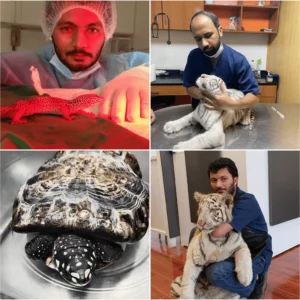
At Zia Vet Clinic, Pakistan’s leading exotic pet referral centre since 2014, our exotic animal team handles everything covered in this guide – from a parrot with early respiratory signs to a tortoise in advanced MBD, from a rabbit with GI stasis to a hedgehog that needs a full diagnostic workup. Our three branches across DHA Lahore, Johar Town Lahore, and DHA Karachi operate 7 days a week, and our team includes internationally trained vets with a decade-plus of hands-on experience with species that most general practices refer away.
If your exotic pet is showing any of the signs described in this article, don’t wait.
For a broader understanding of what living with exotic pets involves – diet, housing, species-specific needs, and preventive care – read our complete exotic pet care guide. And for the full range of what our exotic animal services cover, visit the Exotic Animals service page.