The moment a vet tells you that your dog or cat needs surgery, everything slows down. You hear the word, and your brain starts generating questions faster than you can process them. Is it dangerous? Will they feel pain? What do I do when they come home? What if something goes wrong?
These are entirely normal reactions, and they deserve real answers, not reassurances that sidestep the details. Most veterinary surgeries, when performed by a properly equipped and trained team, go well. What influences outcomes almost as much as the surgery itself is how well prepared the owner is on both ends: before the procedure and during recovery at home.
This guide, put together by the team at Zia Vet Clinic, walks you through everything you need to know – from recognising when surgery is genuinely necessary, to the pre-operative process, to the specifics of home care during recovery.
When Does a Pet Actually Need Surgery?
Surgery is not always the first option, and a good vet will only recommend it when it is genuinely the right one. Understanding the common situations that lead to a surgical recommendation helps you approach the conversation with your vet more clearly.
Foreign body obstruction. Dogs in particular, swallow things they shouldn’t – socks, bones, toys, corn cobs. When a swallowed object becomes lodged in the stomach or intestine and cannot be passed, surgical removal is necessary. Symptoms include vomiting (often repeated and unproductive), loss of appetite, lethargy, and abdominal pain. This is time-sensitive – the longer a foreign body sits, the higher the risk of perforation and serious infection.
Gastric Dilatation-Volvulus (GDV). Known as bloat, this is one of the most urgent surgical emergencies in dogs. The stomach fills with gas and rotates on its axis, cutting off blood supply. Large-breed dogs – German Shepherds, Great Danes, Labrador Retrievers – are disproportionately affected. It progresses from discomfort to collapse within hours. If your dog has a swollen, hard abdomen and is trying unsuccessfully to vomit, get to an emergency vet immediately. There is no home treatment for GDV.
Pyometra. A uterine infection that occurs in unspayed female dogs and cats, most commonly in middle-aged to older animals. The uterus fills with pus and, if not surgically removed, becomes life-threatening. Signs include increased thirst and urination, lethargy, vaginal discharge (in open pyometra), and loss of appetite. Surgical removal of the uterus is the definitive treatment.
Tumour or mass removal. Lumps and masses found on or under the skin, or internally, may require surgical excision for both diagnostic and treatment purposes. Not every lump is malignant, but biopsy is often the only way to know for certain. Early removal of a benign mass is almost always a simpler procedure than waiting until it grows.
Fracture repair. Road accidents are common in Pakistani cities; dogs and cats struck by vehicles frequently suffer broken bones requiring orthopaedic intervention. Fractures involving the femur, tibia, or humerus typically require plate and pin fixation rather than simple splinting.
Cruciate ligament rupture. The cranial cruciate ligament in a dog’s knee is functionally similar to the ACL in humans. It can rupture partially or completely, often with a sudden onset of lameness. Larger dogs rarely recover adequate function without surgical stabilisation.
Ophthalmic conditions. Cherry eye (prolapsed third eyelid gland), entropion (inward-rolling eyelids that scratch the cornea), and eyelid masses may all require surgical correction. These are not cosmetic concerns – untreated, many cause chronic pain and can lead to permanent vision damage.
Before You Get to Surgery Day – The Pre-Surgical Consultation
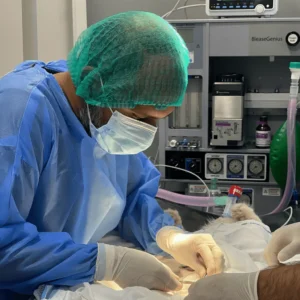
A responsible veterinary surgeon does not take an animal straight to theatre without a thorough pre-operative workup. This step protects your pet, informs the anaesthetic plan, and allows you to ask everything you need to ask.
Pre-Anaesthetic Blood Work
Before any procedure involving general anaesthesia, a blood panel is run. This is not a formality – it checks liver and kidney function, red blood cell count, clotting factors, and overall organ health. Anaesthesia is processed by the liver and kidneys. If either is compromised, the anaesthetic protocol needs to be adjusted. Our in-house laboratory processes pre-surgical panels so results are available quickly rather than waiting for an external lab.
Blood work also catches problems an owner might not be aware of – a subclinical infection, an electrolyte imbalance, or early organ changes that change how the procedure is planned.
Imaging – X-Rays, Ultrasound, or Advanced Scans
Depending on the nature of the surgery, your vet may need imaging before proceeding. Digital X-rays are standard for orthopaedic cases – you cannot plan fracture repair without a clear picture of the fracture pattern. An ultrasound may be used to assess soft tissue structures, organ involvement, or the extent of a mass before excision. In more complex cases, MRI or CT imaging provides the level of anatomical detail needed for surgical planning.
Having this imaging done beforehand reduces surprises during the procedure and allows the surgeon to discuss the realistic scope of the operation with you in advance.
Questions to Ask Before You Agree to Surgery
You are your pet’s advocate. Before signing a consent form, you are entitled to clear answers on all of the following:
- What exactly is being done, and why is surgery the recommended option over medical management?
- What are the risks specific to this procedure and to my pet’s current health status?
- What anaesthetic protocol will be used, and what monitoring will be in place during the procedure?
- What does recovery look like in the first 24-72 hours?
- What activity restrictions apply after surgery, and for how long?
- What are the signs of a post-operative complication, and what should I do if I see them?
- When is the follow-up appointment?
A vet who gives you the time to ask these questions and answers them clearly is one you can trust.
How to Prepare Your Pet Before Surgery Day
Fasting – This Is Non-Negotiable
Your pet must not eat for a minimum of eight to twelve hours before surgery involving general anaesthesia. This is not bureaucratic caution – it is a fundamental safety requirement. An animal that has food in its stomach under anaesthesia can regurgitate and inhale the contents into the lungs, causing aspiration pneumonia, which is a life-threatening complication.
Follow your vet’s fasting instructions precisely. The usual guidance is no food after midnight for a morning surgery. Water is typically permitted until a few hours before – your vet will specify. Do not feed your pet a “light” meal to tide them over. Half a meal is not meaningfully safer than a full one for this purpose.
Withhold or Continue Medications?
If your pet takes regular medication – for epilepsy, heart disease, thyroid conditions, or any other chronic issue – tell the surgical team in advance and ask specifically whether to give the morning dose on surgery day. Some medications must be continued; others should be withheld because they interact with anaesthetic agents. Do not make this decision without explicit guidance from the vet.
Prepare Your Home for Recovery Before You Leave
The day your pet comes home from surgery is not the time to start rearranging furniture. Set up their recovery space in advance. This should be:
- A quiet, enclosed area away from children, other pets, and household activity
- Low enough to the ground that they do not need to jump to get in or out
- Comfortable – a firm, clean surface with some padding
- Close enough that you can check on them regularly without disturbing their rest
For orthopaedic cases especially, your pet will have restrictions on stairs, jumping, and uneven terrain. Think through how your home layout affects this and plan around it.
What Happens on Surgery Day
Drop-Off and Consent
You will sign a surgical consent form that formally authorises the procedure and, in most cases, any necessary anaesthetic tests. Read it. Ask questions about anything unclear before you sign. At this point, the clinical team will do a brief physical assessment – temperature, heart rate, respiratory rate, body weight – to confirm your pet is stable enough to proceed as planned.
Anaesthesia – What It Involves and How Safe It Is
Modern veterinary anaesthesia is considerably safer than many owners fear. The American College of Veterinary Surgeons notes that the vast majority of complications associated with anaesthesia are predictable and manageable when proper pre-operative screening and intraoperative monitoring are in place.
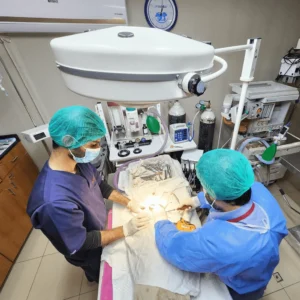
At a properly equipped facility, your pet is monitored throughout the procedure on multiparameter equipment – continuous ECG, oxygen saturation, blood pressure, temperature, and respiratory rate are tracked in real time. An anaesthesia-specific support team member monitors these readings throughout the operation, separate from the surgeon’s focus on the procedure itself.
The pre-anaesthetic blood work done beforehand exists precisely to reduce risk – identifying animals who need modified protocols before they are ever sedated.
In Theatre
Your pet is under the care of the surgical team from the moment they go under anaesthesia until they are stable in recovery. The duration varies significantly by procedure – a simple mass removal may take thirty to forty-five minutes; an orthopaedic fracture repair or a complex soft tissue case can take two to three hours. You will be contacted when the procedure is complete.
Post-Operative Care at Home – Where Recovery Is Won or Lost
Most surgical complications that owners encounter do not happen in theatre. They happen at home, in the days following discharge, when activity restrictions are not followed, wounds are not monitored, or medication is not administered correctly. The recovery phase at home is your active responsibility as an owner – the surgery is what the vet does; the recovery is what you do.
The First 24-72 Hours
Expect your pet to be quiet, slow, and not quite themselves for the first day or two after general anaesthesia. This is normal. Anaesthetic agents take time to fully clear the system. You may notice:
- Unusual drowsiness or clumsiness
- Disorientation or mild confusion, particularly in cats
- Reduced appetite – many pets are not interested in food the evening after surgery
- Mild trembling or shivering
These are not signs of something going wrong. They are expected effects of anaesthesia leaving the system. Offer a small amount of food and fresh water once your pet is fully awake and alert. Do not push them to eat if they are not interested – forcing food on a nauseous post-anaesthetic animal is counterproductive.
The E-Collar – Put It On and Leave It On
The Elizabethan collar (the cone your pet will deeply resent) is there for one reason: to prevent them from licking, chewing, or pawing at the surgical site. This is not an aesthetic concern. A pet that licks a wound introduces bacteria, pulls at sutures, and can cause dehiscence – the technical term for a wound opening up. Dehiscence is a serious complication that may require further intervention.
No matter how much your pet objects to the cone, it stays on until the vet confirms the wound is adequately healed – typically ten to fourteen days, or until sutures are removed. If the fit is causing additional problems, call the clinic for advice. Do not simply remove it.
Activity Restriction – This Is Medical, Not Precautionary
Instructions like “no running, jumping, or climbing stairs for two weeks” sound like excess caution. They are not. After soft tissue surgery, the internal healing process is delicate and can be disrupted by sudden movement or pressure. After orthopaedic procedures – fracture repair, cruciate ligament surgery – sudden loading of the operated limb can displace hardware, tear repaired tissue, or cause the repair to fail.
Follow the restriction to the letter. If your pet needs to go outside, use a lead even in an enclosed garden. Do not let them run free “just for a few minutes.” The implants holding a repaired fracture together do not know that it was only a few minutes.
Wound Monitoring – What Normal Looks Like
Check the surgical site once or twice daily. Normal healing includes:
- Mild redness immediately around the incision in the first two to three days
- Minor swelling at the edges of the wound
- Very slight serous (clear, pale yellow) discharge in the first 24-48 hours
This is a routine inflammatory response – the body’s healing process in action.
Signs of Post-Surgical Complications – When to Call Immediately
Contact your vet promptly if you observe any of the following:
Wound-related:
- Increasing redness, warmth, or swelling beyond the first few days
- Purulent (pus-like, thick, or discoloured) discharge
- A foul smell from the wound
- Sutures that have been pulled out, opened, or are significantly displaced
- The wound edges separating
Systemic signs:
- Persistent high fever (a warm, dry nose alone is not reliable – take temperature rectally if concerned; above 39.5°C warrants a call)
- Complete refusal to eat or drink beyond 24 hours post-surgery
- Vomiting or diarrhoea that continues beyond the first day
- Progressive weakness, collapse, or difficulty breathing
- Extreme pain – vocalising, inability to settle, aggression when the wound area is approached
These signs require same-day veterinary attention, not a wait-and-see approach. Early intervention on a post-op complication is almost always more successful than delayed response.
Pain Management After Surgery
Your pet will be sent home with pain medication. Give it exactly as prescribed, on schedule, for the full course – even if your pet seems comfortable and you think they do not need it. Animals mask pain effectively; discomfort that is not addressed slows healing and increases stress on the healing tissue.
Do not give human pain medications – ibuprofen, paracetamol (acetaminophen), and aspirin are all toxic to dogs and cats. The medications your vet prescribes are species-specific and appropriately dosed. If you are concerned that pain control is inadequate, call the clinic – do not substitute with human products.
Feeding After Surgery
Small, easily digestible meals for the first day or two are advisable. A light chicken and rice meal, or the pet’s regular food in smaller portions, helps the gut re-establish normal function after anaesthesia. Gradually return to the normal diet over 48-72 hours unless the vet has prescribed a specific post-operative diet, which may be necessary after gastrointestinal surgery.
Fresh water should always be available.
Recovery Timelines – What to Realistically Expect
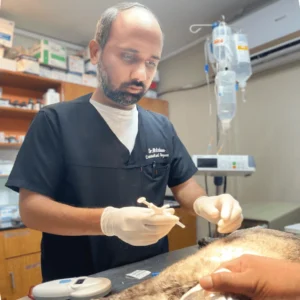
Recovery duration varies substantially by procedure type, your pet’s age, and their overall health going in.
Routine soft tissue procedures (mass removal, wound repair, minor hernia repair): most animals are significantly improved within three to five days and reach full recovery in two to three weeks, once sutures are removed and the wound is confirmed healed.
Gastrointestinal surgery (foreign body removal, GDV repair): recovery is longer – two to four weeks of managed activity, with dietary management for several weeks post-operatively in GI cases.
Orthopaedic surgery (fracture repair, cruciate ligament): the most demanding recovery. Restricted activity for six to eight weeks is standard for most orthopaedic cases. Physiotherapy or controlled exercise protocols are often prescribed to rebuild muscle and joint function progressively. Full return to normal activity may take three to six months depending on the procedure.
Ophthalmic surgery: typically heals relatively quickly – one to two weeks with appropriate wound care and the E-collar faithfully in place.
Regardless of procedure type, your post-surgery follow-up appointment is not optional. It is when the surgeon assesses wound healing, evaluates the success of the intervention, removes sutures if applicable, and adjusts the recovery plan based on what they see.
Frequently Asked Questions About Pet Surgery
How do I know if my pet needs surgery?
Signs that warrant a surgical consultation include sudden or severe lameness, a firm or rapidly growing lump, repeated unproductive vomiting, a distended or painful abdomen, difficulty urinating, vaginal discharge in an unspayed female, or eye conditions that are worsening despite medication. A vet examination is the only way to determine whether surgery is indicated – do not try to make this call at home. A wellness examination is the right starting point for non-urgent concerns.
Can my pet eat the night before surgery?
No. Pets must fast for eight to twelve hours before general anaesthesia. Food in the stomach under anaesthesia creates a risk of regurgitation and aspiration into the lungs – a potentially fatal complication. Follow your vet’s fasting instructions precisely.
Is anaesthesia safe for my dog or cat?
Modern veterinary anaesthesia is significantly safer than it was even ten to fifteen years ago. Pre-anaesthetic blood screening, species-specific agents, and continuous multiparameter monitoring during the procedure have substantially reduced anaesthetic risk. The risk is never zero, but in a properly equipped facility with a trained team, it is low for the vast majority of patients. The American College of Veterinary Surgeons outlines the standard of care that underpins safe veterinary surgery.
How long does pet surgery take?
It varies enormously. A simple mass removal may take thirty to forty-five minutes. Complex orthopaedic procedures or emergency surgeries like GDV repair can take two to three hours or more. Your vet will give you an estimated timeframe, though this may change based on what the surgeon finds once the procedure begins.
How do I stop my cat or dog from licking their stitches?
Keep the E-collar on at all times – including when you are present and watching them. Animals are faster than owners think. If the E-collar causes additional problems (an injury-prone edge, distress eating or drinking), call the clinic to discuss an alternative such as a soft collar or a surgical suit. Never simply remove the collar to give them a break, then forget to put it back.
What are the signs of infection after pet surgery?
Increasing redness, swelling, warmth, or pus-like discharge at the wound site. A foul smell from the incision area. Progressive rather than improving pain or discomfort. Fever. If you see any of these, contact your vet the same day – do not wait until the scheduled follow-up.
Can I leave my pet alone after surgery?
Not in the first 24-72 hours. The early post-anaesthetic period carries the most risk – your pet can disorient, fall, injure themselves, or interfere with the wound. If you cannot be home during this period, speak to the clinic about post-operative monitoring options.
What if my pet pulls out their stitches?
Call your vet immediately. Do not attempt to re-close the wound yourself. Depending on the stage of healing and how much of the wound has opened, the vet will advise whether it needs to be re-sutured or can be managed conservatively. In the meantime, keep the area clean, prevent further interference with the cone, and bring your pet in for assessment.
How long does recovery from orthopaedic surgery take in dogs?
For most orthopaedic procedures – fracture repair, cruciate ligament surgery – full recovery takes three to six months, with strict activity restriction for the first six to eight weeks. This is the single most common area where owners undo good surgical work by allowing premature activity. Your vet will guide a graduated return to exercise based on how healing is progressing.
When should I take my pet back to the vet after surgery?
At the time scheduled by the surgeon – typically seven to fourteen days post-procedure for suture removal and wound assessment, and again at any point in between if you observe signs of complications. Do not miss the follow-up even if your pet appears to be recovering well. Many post-surgical issues are identified on clinical examination before they become visible to the owner.
What does pre-surgical blood work check for?
A pre-anaesthetic blood panel assesses liver and kidney function (both organs process anaesthetic agents), red blood cell count (to identify anaemia), white cell count (to identify underlying infection), platelet count (clotting ability), and key electrolytes. The results inform the anaesthetic protocol – in animals with borderline organ function, the team adjusts accordingly. Our laboratory team processes these panels in-house.
Surgery Is a Beginning, Not Just an Event
The procedure is what happens in theatre. The recovery is what happens at home over the weeks that follow, and it is entirely in your hands. The owners whose pets recover well are the ones who follow instructions without shortcuts – who keep the cone on, keep the activity restricted, check the wound daily, and give the medications on schedule without skipping doses because the animal seems fine.
Your pet cannot tell you where it hurts or when something feels wrong. Your observation, your vigilance, and your willingness to call the clinic when something changes are the most important tools in their recovery.
Zia Vet Clinic offers advanced surgical care across all three branches – DHA Lahore, Johar Town Lahore, and DHA Karachi – seven days a week. Our surgical team brings internationally credentialed experience across soft tissue, orthopaedic, emergency, ophthalmic, and oncological procedures, supported by a purpose-built theatre with modern anaesthesia systems and in-house imaging and diagnostic capabilities. Pre-surgical consultations are available at all branches for second opinions and referral cases.
If your pet has been recommended for surgery, or you want a specialist assessment before deciding, book a consultation with our team today.