
Let’s be honest – most of us check if our dog’s food bowl is full before we ever think about checking his teeth. It’s not negligence; it’s just that dental health in pets isn’t talked about enough here in Pakistan. We focus on vaccinations, deworming, coat condition – the visible stuff. But what’s happening inside your pet’s mouth, quietly and painfully, often goes completely unnoticed until it becomes a serious problem.
Here’s a number that should stop you mid-scroll: by the age of just three years, more than 80% of dogs and 70% of cats already have some form of dental disease. And the vast majority of those pets are showing no dramatic signs. They’re still eating. Still wagging their tails. Still curling up beside you at night. But underneath all of that, bacteria are breaking down their gum tissue, eating away at bone, and – in advanced cases – entering the bloodstream and damaging organs like the heart, liver, and kidneys.
This blog is your complete guide to understanding pet dental health – what the warning signs actually look like, why your pet won’t tell you they’re in pain, what happens during a professional dental cleaning, and what you can do at home starting today. Whether you have a Labrador in DHA Lahore, a Persian cat in Karachi, or a Pomeranian in Johar Town, this is information every pet owner in Pakistan needs.
What Is Dental Disease in Pets and Why Does It Happen?
Dental disease – more precisely called periodontal disease – is not a single condition. It’s a progressive infection of the structures that support your pet’s teeth: the gums, the periodontal ligament, and the jawbone itself.
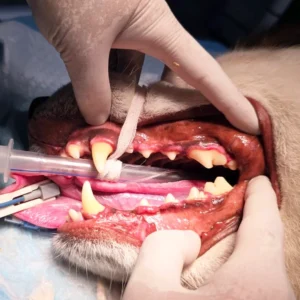
It starts innocently enough. Every time your pet eats, a thin sticky film called plaque forms on the surface of their teeth. Within 24 to 48 hours, if that plaque isn’t disrupted, the minerals in your pet’s saliva bind to it, and it hardens into tartar (also called calculus) – a rough, yellowish-brown crust that sticks firmly to the tooth surface and cannot be removed by brushing alone.
Once tartar forms, bacteria get to work. They migrate below the gumline, triggering an immune response. The gums become inflamed – this early stage is called gingivitis. If caught here, the damage is largely reversible. But most pet owners don’t catch it here.
As the infection deepens, the gum tissue separates from the tooth, forming pockets where yet more bacteria thrive. The bone holding the tooth in place begins to recede. Teeth become loose, painful, and eventually fall out. At this stage – periodontitis – the damage is permanent.
And through all of this, your pet may show very little outward sign that anything is wrong. Pets are biologically hardwired to hide pain. In the wild, showing weakness attracts predators. That instinct doesn’t disappear just because they live in your home.
The Warning Signs of Dental Disease in Dogs and Cats
This is the section to screenshot, save, and share. These are the signs Pakistan pet owners most commonly miss or dismiss – and shouldn’t.
1. Bad Breath (Halitosis) – The Most Common First Sign
Let’s set the record straight on something that’s genuinely misunderstood: bad breath is not normal in dogs or cats. Not even a little bit. Your pet’s breath should smell relatively neutral. If it smells persistently foul, sour, or like something rotting – that is a sign of bacterial infection, not just “dog breath.”
Bad breath in pets almost always signals that disease is already present. It’s the smell of anaerobic bacteria metabolizing tissue below the gumline. It’s one of the earliest and most reliable warnings your pet can give you, and far too many owners write it off as a normal quirk.
If your dog or cat has breath that makes you pull away, it’s time to call your vet.
2. Visible Tartar on the Teeth – Yellow to Brown Discolouration
Run your finger along your pet’s upper back teeth (the molars and premolars). Can you feel a rough, chalky crust at or near the gumline? Can you see yellowish or brown buildup? That’s tartar. It’s one of the most visible signs of dental disease and one of the easiest for owners to spot at home.
In many Pakistani breeds popular in urban homes – Pomeranians, Shih Tzus, Yorkshire Terriers, and other small dogs – tartar accumulates faster because their teeth are more crowded together. If you have a small-breed dog, check their back teeth regularly.
3. Red, Swollen, or Bleeding Gums
Healthy gum tissue should be pale pink and firm. If you notice your pet’s gums are red, puffy, or bleed when you touch them – even slightly – that’s gingivitis, and it’s the body’s inflammatory response to bacterial infection. At this stage, the damage is still reversible with proper treatment, which is exactly why catching it early matters so much.
4. Difficulty Eating, Dropping Food, or Chewing on One Side
This one breaks a lot of owners’ hearts when they realise it retrospectively. If your dog is suddenly less enthusiastic about food, takes longer to finish a meal, drops kibble from their mouth, or consistently chews on only one side, there’s a very good chance their mouth is hurting. They’re not being fussy. They’re in pain and trying to work around it.
Cats often become quieter and less interactive when oral pain sets in. If your cat, who used to headbutt you enthusiastically at dinnertime, is now approaching their bowl slowly and eating less – don’t assume they’re just being a cat.
5. Pawing at the Mouth or Face-Rubbing
When a pet repeatedly paws at their mouth or rubs their face along the ground or furniture, they’re trying to relieve oral discomfort. Some owners mistake this for ear problems or skin irritation. It’s worth having both ruled out, but the mouth should be one of the first places checked.
6. Excessive Drooling or Bloody Saliva
A sudden increase in drooling – especially if the saliva is thick, ropey, or tinged with blood – is a red flag. This often indicates significant gum disease or an infected or abscessed tooth.
7. Loose, Broken, or Missing Teeth
By the time a tooth is visibly loose or has already fallen out, you’re looking at advanced periodontal disease with significant bone loss. This is not a minor issue – it requires immediate veterinary attention. A tooth doesn’t just become loose on its own; the supporting bone has been destroyed by infection.
8. Behavioural Changes – Irritability, Withdrawal, or Lethargy
Chronic pain changes personality. A dog who used to love having his head scratched and now snaps when you touch his muzzle is telling you something is wrong. A cat who was playful and social but has become withdrawn and lethargic may be silently dealing with significant oral pain.
Many owners, looking back after their pet has had a dental procedure, say: “I didn’t realise how much pain he was in until after his teeth were cleaned. It’s like I got a completely different dog back.”
Why Cats Are Different – Specific Dental Risks in Felines
Cat dental disease deserves its own mention because felines have a unique condition that dogs don’t: Feline Odontoclastic Resorption Lesions (FORLs), sometimes called tooth resorption.
In humans, cavities decay from the outside in – you can often see them. In cats, tooth resorption works from the inside outward. By the time the damage is visible, the tooth structure is already severely compromised and usually needs to be extracted. Studies suggest that by age three, more than 50% of cats have at least one of these lesions – and they’re extremely painful.
This is one of the biggest reasons why annual dental examinations under veterinary supervision – not just a visual check at home – are so important for cats specifically.
How Dental Disease Affects Your Pet’s Overall Health
This is where dental disease stops being just a “mouth problem” and becomes a whole-body concern – and it’s the part that most Pakistani pet owners haven’t heard before.
The mouth is one of the most bacteria-rich environments in the body. In a healthy pet with healthy gums, that bacterial load is contained. But when gum tissue breaks down and pockets form, bacteria gain direct access to the bloodstream. Every time your pet chews, those bacteria get pushed into circulation.
The organs most affected by this are:
The Heart: Bacteria from the mouth – particularly Porphyromonas species common in canine periodontal disease – can colonise the heart valves, causing a condition called bacterial endocarditis. Small dog breeds are particularly susceptible to heart problems worsened by chronic dental infection.
The Kidneys: Kidneys act as the body’s filter. When they’re repeatedly exposed to the bacterial load coming from an infected mouth, over time they sustain cumulative damage. Chronic kidney disease in senior pets is often linked, at least partially, to lifelong untreated dental disease.
The Liver: Similar to the kidneys, the liver is vulnerable to repeated bacteraemia (bacteria in the blood) originating from dental infections.
This is not alarmist. This is peer-reviewed veterinary science, and it fundamentally changes how we should think about dental care. Keeping your pet’s teeth clean isn’t vanity – it’s preventive medicine.
What Happens During a Professional Pet Dental Cleaning?
A lot of pet owners in Pakistan hesitate to book a dental cleaning because they’re not sure what it involves, or because the idea of anesthesia makes them nervous. Let’s walk through the process clearly.
Step 1: Pre-Anesthetic Health Assessment
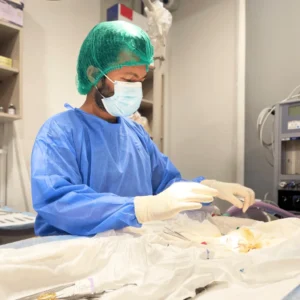
Before anything else, your vet will conduct a physical examination and recommend pre-anesthetic blood work. This checks kidney function, liver enzymes, and blood cell counts – confirming that your pet can safely metabolise anesthetic drugs. This step exists specifically to protect your pet and is non-negotiable in responsible veterinary practice. If your vet skips blood work before anesthesia, that’s a red flag.
Step 2: General Anesthesia
Here’s the most important thing to understand about pet dental cleaning: it cannot be done properly without anesthesia. A pet that is conscious and moving cannot have the area below the gumline safely cleaned, cannot have dental X-rays taken accurately, and cannot have a thorough oral examination conducted without risk of injury – to the pet or the vet.
Anesthesia-free “dental cleaning” at groomers or in non-veterinary settings only removes visible surface tartar. It leaves the subgingival disease – the part that actually causes the harm – completely untreated and gives owners a false sense of security. Under proper veterinary anesthetic protocols with vital sign monitoring, the risk of anesthesia in a healthy pet is extremely low.
Step 3: Full Oral Examination
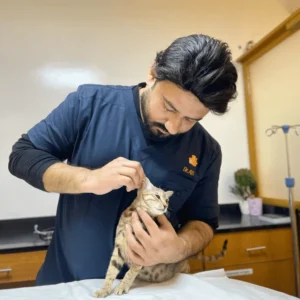
Once your pet is safely under anesthesia, your vet performs a complete oral examination – checking every tooth individually, probing for pocket depth around the gumline, assessing for mobility, fractures, discolouration, and mass lesions.
Step 4: Dental X-Rays
Dental X-rays reveal what no visual examination can: the condition of the tooth roots, the jawbone, and the tissue below the gumline. Up to 60% of dental disease in pets exists below the gumline and is invisible to the naked eye. X-rays are not optional in quality dental care – they’re how your vet knows what actually needs treating. Our digital X-ray services allow us to capture clear, immediate images that guide every dental procedure.
Step 5: Ultrasonic Scaling
Using an ultrasonic scaler – the same technology used in human dentistry – plaque and tartar are removed from above and below the gumline. This is then followed by hand scaling to address areas the ultrasonic tool can’t reach.
Step 6: Polishing
After scaling, the tooth surface is microscopically roughened; polishing smooths it back out, removing the microscopic grooves where new bacteria would otherwise grip and multiply quickly.
Step 7: Extractions (If Needed)
If a tooth has lost more than 50% of its supporting bone, is abscessed, fractured, or causing pain with no restorable future, extraction is the most humane option. A missing tooth is not a problem for a dog or cat. A painful, infected tooth left in place absolutely is.
Step 8: Post-Procedure Care
Your pet will be monitored during recovery from anesthesia, and you’ll receive discharge instructions for soft food, any medications prescribed, and at-home care. Most pets recover quickly and – this is the part that owners consistently find surprising – and become noticeably more energetic and happy within days of a dental procedure.
At-Home Dental Care: What You Can Do Between Vet Visits
Professional cleaning handles the disease that’s already established. At-home care is what prevents – or at least slows – it from coming back. Think of it like the relationship between a dentist visit and brushing your own teeth every day.
Toothbrushing – Still the Gold Standard
Daily brushing with a pet-specific toothbrush and enzymatic pet toothpaste is the single most effective thing you can do at home. Never use human toothpaste – it contains fluoride, xylitol, and detergents that are toxic to pets.
Start slowly. Let your pet smell and lick the toothpaste from your finger. Over several days, progress to running your finger along their teeth, then introduce the brush. Focus on the outer surfaces – especially the upper back teeth – where tartar accumulates fastest. Three to four times per week makes a meaningful difference; daily is ideal.
Dental Chews and Toys
Certain dental chews and rubber toys are specifically designed to reduce plaque accumulation through mechanical friction. Look for products verified by the Veterinary Oral Health Council (VOHC) – these are clinically tested. Not all “dental” products on the market actually work.
Water Additives
Dental water additives are a good supplementary tool for pets who resist brushing – they help reduce bacterial load in the mouth and are simply added to your pet’s drinking bowl. Ensure the product is specifically formulated for pets.
Diet Considerations
What your pet eats affects their dental health more than most owners realise. Certain therapeutic dental diets are formulated with a specific kibble size and texture that mechanically scrubs the tooth surface as the pet chews. Your vet can help you assess whether a dental-specific diet is appropriate for your pet, as part of a diet management consultation.
How Often Does Your Pet Need a Professional Dental Cleaning?
The general guideline: once a year, starting from age two for most dogs and cats. Some pets – particularly small breeds, brachycephalic (flat-faced) breeds like Pugs and French Bulldogs, and senior pets – may need cleaning every six months.
The interval isn’t one-size-fits-all. It depends on your pet’s breed, diet, anatomy, and how consistently at-home care is maintained. Your vet can assess where your pet falls on the dental disease spectrum during their routine wellness examination and recommend a cleaning schedule accordingly.
The expensive mistake is waiting until there’s a visible problem. At that point, you’re not just paying for a cleaning – you’re paying for extractions, antibiotics, extended anaesthesia time, and a pet who has been living in pain for months or longer.
Breeds Most Prone to Dental Disease in Pakistan’s Pet Community
If you own any of the following breeds – which are extremely popular in DHA Lahore, Johar Town, and DHA Karachi – be especially vigilant about dental health:
Small breeds with crowded teeth (highest risk):
- Pomeranian
- Shih Tzu
- Yorkshire Terrier (Yorkie)
- Maltese
- Chihuahua
Brachycephalic (flat-faced) breeds – misaligned teeth increase risk:
- Pug
- French Bulldog
- English Bulldog
- Persian Cat
- Exotic Shorthair Cat
Larger breeds where dental disease goes unnoticed longer:
- German Shepherd
- Labrador Retriever
- Golden Retriever
- Rottweiler
And if you care for exotic pets – rabbits, guinea pigs, and chinchillas all have continuously growing teeth that require specialised dental oversight very different from dogs and cats. Our exotic animal care services include dental assessment as part of comprehensive exotic pet health management.
A Word on Dental Health and Puppy/Kitten Development
Many new pet owners in Pakistan ask when to start thinking about their puppy’s or kitten’s teeth. The answer: immediately.
Puppies have 28 deciduous (baby) teeth that begin erupting around 3-4 weeks. By 6-7 months, these should all be replaced by 42 permanent adult teeth. Retained baby teeth – where a baby tooth doesn’t fall out when the adult tooth erupts – are a common problem, particularly in small breeds. Retained teeth create crowding and accelerate tartar accumulation. Your vet can identify and extract retained teeth during a routine exam.
Start handling your puppy’s or kitten’s mouth from day one. Let them get comfortable with having their lips lifted and their gums touched. This makes brushing – and future vet examinations – infinitely easier throughout their life. The wellness examination for young pets always includes an oral assessment to catch these developmental issues early.
External Reference – For Further Reading
For pet owners who want to go deeper on the clinical science behind veterinary dental care, the American Animal Hospital Association (AAHA) Dental Care Guidelines for Dogs and Cats are the global gold standard reference used by veterinary professionals worldwide. The guidelines reinforce everything covered in this blog and are updated as new evidence emerges.
For Pakistan-specific pet ownership guidance and community support, the Pakistan Veterinary Medical Council (PVMC) governs veterinary practice standards – you can verify the credentials of any veterinary professional or clinic through their directory.
The Pakistan Context: Why This Matters More Than You Think Right Now
Pet ownership in Pakistan’s urban centres – Lahore, Karachi, Islamabad – has grown significantly over the last decade. DHA and Gulberg in Lahore, DHA and Clifton in Karachi: these neighbourhoods now have thousands of households with dogs and cats as genuine family members, not just guard animals.
But the veterinary culture around preventive care is still catching up. Most Pakistani pet owners bring their animal in when something is visibly wrong – a limping leg, vomiting, a visible wound. Dental disease, because it hides so well, rarely gets that kind of proactive attention.
What makes this even more significant is that the bacteria most associated with pet periodontal disease are zoonotic – they can, in rare circumstances, be transmitted between pets and humans through close contact. Given that many Pakistani families allow their pets to sleep in their bedrooms, lick their faces, or interact closely with young children, maintaining your pet’s oral health is not just about the animal. It’s a household health matter.
We’re not saying this to alarm you. We’re saying it because it underlines why dental health deserves the same proactive attention you give to deworming and vaccination schedules – not just a reaction when something looks obviously wrong.
Frequently Asked Questions (FAQs)
How often should dogs and cats get professional teeth cleaning?
Most dogs and cats benefit from a professional veterinary dental cleaning once a year, starting from around two years of age. Small breeds, flat-faced breeds, and senior pets may need cleaning every six months because they accumulate tartar faster or have teeth more susceptible to disease. Your vet will assess your individual pet and give a recommendation based on their specific oral health status.
Is bad breath in dogs and cats normal?
No, and this is one of the most important myths to correct. Bad breath in pets is not a quirk or a breed trait. It’s a symptom of bacterial infection in the mouth. Healthy pets have neutral-smelling breath. Persistent bad breath almost always signals that dental disease, plaque accumulation, or infection is already present and needs veterinary attention.
Is anesthesia safe for pets during dental cleaning?
Yes, when performed under proper veterinary protocols. Your vet will run pre-anesthetic blood work to confirm your pet’s organs can safely process the drugs, and a trained team monitors vital signs throughout the entire procedure. The fear of anesthesia is the #1 reason pet owners delay dental treatment – and that delay often leads to far greater suffering and expense. In the hands of a qualified veterinary team, anesthesia risk in a healthy pet is very low.
What are the early signs of dental disease in dogs?
The earliest signs are bad breath, visible yellow-brown tartar on the back teeth, and red or slightly swollen gums. Later signs include difficulty eating, dropping food, chewing on one side, pawing at the mouth, drooling, and behavioural changes like irritability or withdrawal. Many pets show no dramatic signs even with significant disease – which is why annual dental examinations matter.
Can dental disease in pets affect their heart and kidneys?
Yes. This is one of the most under-discussed facts in pet health. When periodontal disease is left untreated, bacteria from the infected gum tissue enter the bloodstream and can colonise the heart valves (causing bacterial endocarditis), damage the kidneys through repeated exposure to bacteraemia, and strain the liver. Treating dental disease is preventive medicine for your pet’s entire body, not just their mouth.
How do I brush my pet’s teeth at home?
Start by letting your pet lick pet-safe enzymatic toothpaste (never human toothpaste) off your finger. Gradually introduce gentle rubbing of the teeth with your finger, then a soft pet toothbrush. Focus on the outer surfaces of the upper back teeth where tartar builds fastest. Aim for three to four times per week at minimum. Always use a calm, slow approach – positive reinforcement with praise or a small reward makes the routine much more sustainable.
At what age should my puppy or kitten first have a dental checkup?
Dental assessment should start at your very first puppy or kitten wellness visit. Baby teeth emergence, bite alignment, and any retained baby teeth are checked early. The first professional cleaning under anesthesia is typically recommended around 2-3 years of age, though your vet may recommend earlier if significant tartar or disease is already present.
What is periodontal disease in pets and how serious is it?
Periodontal disease is a bacterial infection of the tissues that hold your pet’s teeth in place – the gums, periodontal ligament, and jawbone. It starts as plaque, hardens into tartar, and progresses from early gingivitis (reversible) to advanced periodontitis (permanent bone and tissue loss). It’s the most common disease in companion animals and a leading cause of tooth loss, chronic pain, and – left untreated – systemic organ damage. It’s serious, and it’s almost entirely preventable.
Can I skip the anesthesia and just get my dog’s teeth scraped at a groomer?
We’d strongly advise against treating a groomer’s tooth scraping as a substitute for veterinary dental cleaning. Surface scraping without anesthesia removes only visible tartar above the gumline – it doesn’t address subgingival disease, cannot include X-rays, and can actually leave the tooth surface rougher and more vulnerable to future plaque adhesion. It also gives a false impression of dental health, which delays proper treatment. This is why all professional veterinary associations globally recommend anesthesia as a requirement for proper dental cleaning.
What happens if I ignore my pet’s dental problems?
Progressive dental disease causes chronic pain that pets hide remarkably well, bone loss around the tooth roots, tooth loss, and bacterial entry into the bloodstream, affecting the heart, kidneys, and liver. What starts as a routine cleaning – when caught early – becomes far more complex and expensive when left untreated. More importantly, your pet lives with ongoing pain during that entire delay. The kindest and most cost-effective approach is always early intervention.
How long does a professional pet dental cleaning take?
A routine dental cleaning typically takes between one and two hours. If extractions are needed, or if there is significant disease requiring more extensive treatment, it can take longer. Your pet will spend some additional time in recovery before going home the same day. You’ll receive a complete report of what was found and what was treated.
Are certain dog breeds in Pakistan more prone to dental problems?
Yes. Small dog breeds popular in Pakistani urban homes – Pomeranians, Shih Tzus, Yorkshire Terriers, Maltese – are genetically predisposed to more rapid tartar buildup and more severe dental disease due to their crowded teeth. Flat-faced breeds like Pugs and French Bulldogs also experience higher rates of dental disease due to tooth misalignment. These breeds need dental checkups more frequently – ideally every six months – and owners should start at-home brushing as early as possible.
Closing: Your Pet’s Mouth Is Telling You Something – Are You Listening?
Dental disease is quiet. It builds slowly, it hides behind a wagging tail and a normal appetite, and by the time the signs become impossible to ignore, significant damage has already been done. But here’s what’s equally true: it is almost entirely preventable. A combination of regular professional cleaning and consistent at-home care can protect your pet from one of the most common sources of chronic pain in companion animals.
At Zia Vet Clinic, our veterinary team performs professional dental cleanings across all three of our branches – DHA Lahore, Johar Town Lahore, and DHA Karachi – using ultrasonic scaling, pre-anesthetic blood work, and intraoral assessment protocols that reflect current best practices in veterinary dentistry. For complex cases, we also have digital X-ray capabilities and full laboratory services on-site to support every dental procedure safely.
If you haven’t had your pet’s teeth checked in the last year – or ever – now is the right time. Not next month. Not when things look worse. Now.
Book your pet’s dental examination at Zia Vet Clinic today. Our team is available at DHA Lahore, Johar Town Lahore, and DHA Karachi. You can also explore our full range of veterinary services here – because good dental health is just one part of a complete preventive care plan for your pet.
Your pet trusts you with everything. Their teeth are no different.
Have a question about your pet’s dental health? Drop it in the comments below or contact our team directly. We’re here to help.