


Pet Microchipping - Permanent ID for Dogs, Cats & All Pets


Permanent Identification for Your Pet’s Safety
A microchip is a tiny electronic device, about the size of a grain of rice, implanted under your pet’s skin. At Zia Vet Clinic, it carries a unique ID number readable by a scanner, linking your pet to your contact details in a database. Unlike collars and tags, a microchip provides permanent, tamper-proof identification for life.
Pet Microchipping is one of the most effective ways to reunite with a lost pet. It is also mandatory for international pet travel documentation. Our pet microchip services are available for cat microchipping, dog microchipping, and all other pets at our DHA Lahore, Johar Town Lahore, and DHA Karachi branches.
Microchipping for International Pet Travel
If travelling abroad with your pet, microchipping is mandatory for most destination countries. The microchip must be compliant with the ISO 11784/11785 standard and implanted before or with the rabies vaccination, not after or alongside it. If the vaccine is given first, it’s considered invalid for travel purposes, and the entire 21-day-plus process must restart from scratch. We use internationally compliant chips, get the sequencing right the first time, and guide you through the entire travel documentation process, with trusted vet microchipping services in Lahore and Karachi for pet owners relocating internationally.
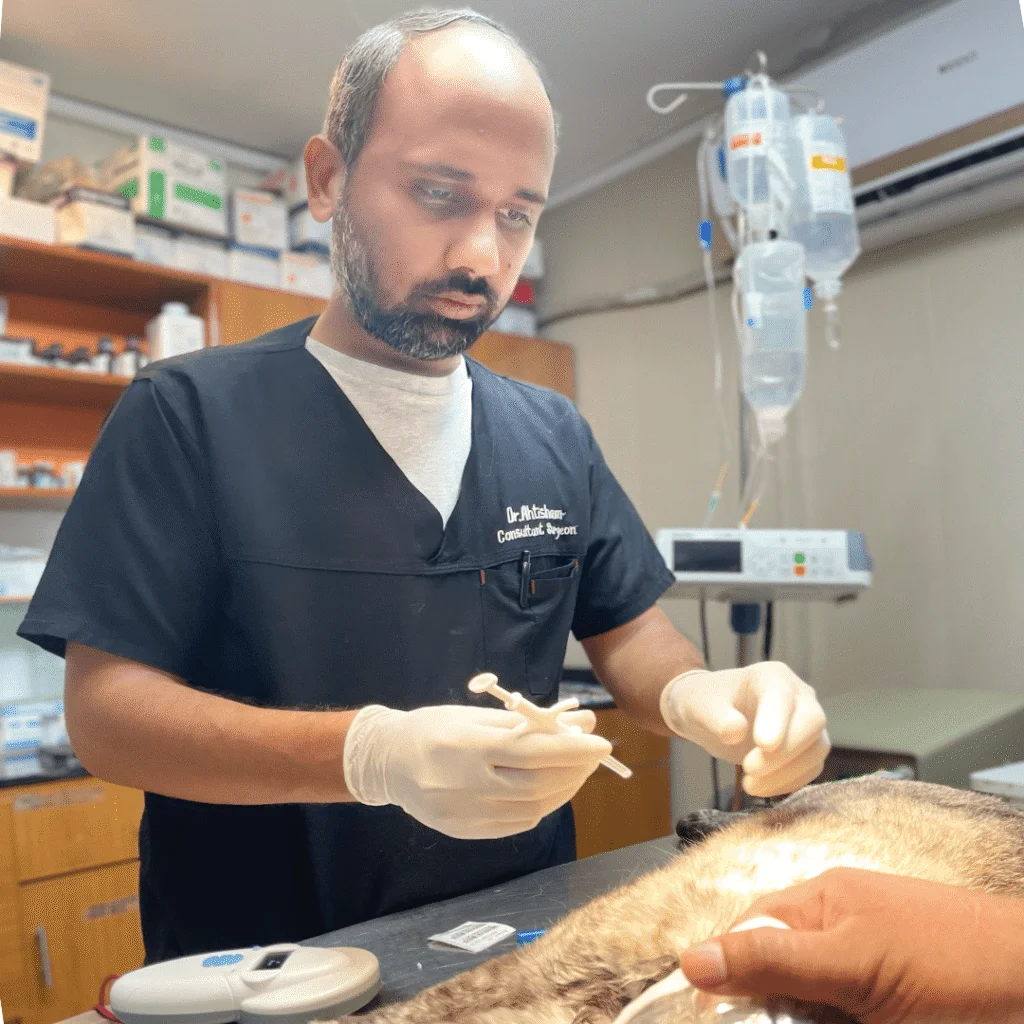
The chip is implanted via quick injection, similar to a vaccination, between the shoulder blades. It takes seconds, requires no anaesthesia, and causes only momentary discomfort. The chip is passive - no signals, no battery, no ongoing discomfort. When scanned, it displays the unique
ID matched to your registered contact information.
Schedule Microchipping
Whether for safety, identification, or travel, pet microchipping in Pakistan is a simple step with lifelong benefits. Contact any branch our veterinary microchip clinic team will guide you through every step.


Frequently Asked Questions
Comparable to a routine injection. Most pets show only a brief reaction, no anaesthesia required.
Modern chips have anti-migration features and are extremely reliable. We verify placement and function after implantation.
Yes. The chip is only useful with current contact details. Update whenever you change phone number or address.
Puppies and kittens can be safely microchipped from around six to eight weeks of age. It can also be done during a routine visit or at the time of spay/neuter.